|
FEATURE ARTICLES
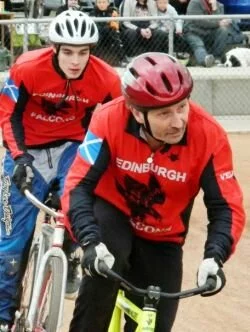
Not many readers, let alone fellow competitors, will know that Edinburgh veteran Lee Lawrence is winning his toughest race against cancer!
Remarkably, last weekend Lee finished second in the national veterans (over-50s) championship at Exeter just two days after the anniversary of his last radiotherapy session, so it was a real milestone for Lee in more ways than one.
Now, spurred on by his success and improving health, Lee is happy to share his story with Spokesman readers.
I still don't know if it's the right thing but I do feel that sharing my story may give hope to others if they find themselves in the same situation as I was and to assure them that it's not necessarily all doom and gloom Lee told Spokesman.
Heres Lees remarkable, inspirational story which really is
A TALE OF HOPE - posted 22 June 2013
Having missed out on half of 2010 and all of the 2011 season due
to a knee injury, I was all set to come back to racing last year. I'd
started to go out on the road bike during the 2011/2012 winter in readiness for the new season.
In February, I developed a cold which, in turn, appeared to bring on a toothache resulting in what I thought was an abscess. A visit to the doctor resulted in an appointment with the dentist who, on investigation, referred me to the ENT department at the local hospital, obviously experience telling her that something was not quite right.
Having run initial tests with two or three biopsies taken, I was informed that there was a 95% chance of everything being fine although they couldn't really tell what the problem was. More visits and more tests still yielded no definite results so I was referred to another hospital.
I can't quite remember the sequence of events as they are all a bit of a blur now, suffice to say that the 95% chance of everything being fine had now done a complete U-turn and now it was 95% certain that I had cancer. Even now, thinking of that moment, It is like a kick in the gut.
On my way home, thoughts of the family were uppermost in my mind and, having lost my own dad at an early age, I had visions of my own kids growing up without me. That was one of the few times I allowed myself to be emotional about it. I now just had to get on with it and await the radiotherapy treatment which was to start at the end of April. I was signed off from work immediately for what I thought would be at the most a couple of months - little did I know that I wouldn't be back until the week before Christmas in eight months time.
My treatment consisted of driving 25 miles to the hospital in Edinburgh every day for six weeks with the initial day being an overnight stay for chemotherapy. Now, at this stage, if there were any thoughts of feeling sorry for myself, these were soon dispelled when I saw others who I got to know over the weeks, who were far worse off than me. It may seem an odd thing to say, but I was actually feeling very lucky with my own situation.
It was almost like a club, where we would all get together every day while awaiting the daily radiation blast. I found out that some of these people were having to travel 50-60 miles each way every day. Again, this made me assess my own situation and helped me to accept what was happening.
The treatment I had to have was mainly aimed at my lymph node on the right hand side of my neck. As a precaution, a feeding tube was placed in my stomach to allow me to feed if the radiotherapy affected my throat. All was well for a couple of weeks with no problems eating.
After that, I found that it was becoming increasingly difficult to eat due to the swelling caused by the treatment and, as one of the side affects was temporary loss of taste buds, the thought of food became less and less appealing. So, for about two months, nothing other than water passed my lips as I was having to pass liquid through the feeding tube and plug into a machine at night to pump nutrition into me.
As I had not been able to ride for a year because of my knee, I had put on a lot of weight as I was unable to exercise. Much to the distress of the specialist, I started to (rapidly) lose a lot of this weight. To me, it was fantastic - the best diet I'd ever been on even if rather extreme (one of the positives I'll take from the whole thing!).
As I had already decided that I would beat this and that I would return to racing after it, I took this as a positive especially as there was nothing I could do about it anyway - I was taking as much 'feed' as I possibly could so let me get some pleasure from the situation at least.
What I decided to do was make sure I was in good shape to try to emulate my brother Ian, by contesting (and winning) the over 50s British Veterans Individual in 2013.
Training was impossible while I still had the feeding tube in but they
wouldn't give me a date for it to be taken out. Fortunately, this decision was taken out of everybody's hands when I woke up one morning and there it was laying on the bed beside me. A temporary 'repair' at the local hospital resulted in the decision to keep it out.
It was October and I could now get down to some serious training. I started going back to the gym most days and found my fitness returning. A previous respiratory problem I had seemed to have disappeared and my knee had got better (still not 100% I might add). I could feel my strength returning and was, for the first time,
actually enjoying the gym (OK, maybe I got a bit obsessed).
When I got the date for the over-50's, I was able to plan ahead a bit more but there was still the case of doing some team racing. This was going to be a big test and, with an early March match against Northumberland scheduled, the nerves were starting to set in while contemplating the depressing prospect of not performing to at least the standard I was at a couple of years before.
Thank goodness that everything went fantastically well and I only dropped one point from four races - more than I could have hoped for. Subsequent matches proved that my overall fitness was pretty good and I was back to full health (in fact better health than Id been in for a few years).
The date for the Veterans had been set as the 15th June. This was quite notable as it was just a couple of days after the anniversary of my radiotherapy finishing. From what was a long way off, the time finally came and I set off on the arduous (near 1000 mile round trip). Having had a double header race day against Heckmondwike and Astley two weeks before and only dropping one point, I was confident of a good performance but dare I even think of taking the title. I did dare!
Having received my draw, it couldn't have been much better for me if I'd have done it myself. It became even more of a possibility when I beat Denis Hubble in my second race. My first three races yielded maximum points which was in my plan (which also suggested seven points from my last two). Unfortunately, I only managed six which resulted in 18 points and a run off with Dave Murphy for second place; the winner being Denis Hubble. I took some solace in the fact that I was the only one to beat Denis in the whole match!
Having lost the toss to Dave for grid positions, he took the favoured grid two with myself on four. We took to the grid and away we went. My plan to gate around Dave did not materialise, so I knew I would have to do something from the back. Lap three presented me with an opportunity. The thoughts of the last year went through my mind and I managed to somehow find the power to pass Dave on the outside and even keep to the track on the exit of the bend. Thank goodness for wide straights at Exeter!
I held on to the lead to take the runner up trophy! Obviously given the one point difference between myself and Denis, it was tinged with some disappointment but, had you offered me that result 12 months ago, I would have bitten your hand off!!
I must say a huge thanks to Gavin Parr and Andy Angell for the nutrition and training advice over the last months. I am really grateful to them both it helped tremendously - and most importantly, a massive thanks to Alison, Mikey and Joey for all of the love and support given to me during that time without whom it would have been so much worse.
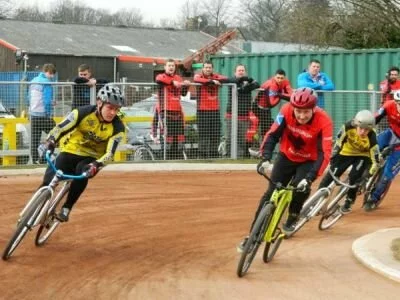
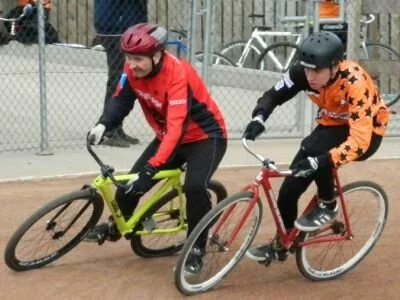
Still beating the best - Lee Lewrence leads British champion Andy Angell.
So, there it is. I had asked Rod not to say anything about my 'predicament' when I discussed it with him some time ago, especially as there had been announcements on Spokesman-Online of some being not so lucky as me last year which I do feel guilty about and whose families I feel desperately sad for.
Now I feel it is time to share the story if it can give hope and
maybe inspire others in the same situation. I won't get the all clear for four more years but all looks well now with checkups being every two months rather than what was every two weeks and I'm feeling good. In fact, so good after my performance in Exeter, I signed up for the over 40's and will be booking my ticket to Oz in the next week or two for the World Veterans Championship.
That will also reunite me with brother Ian (ex multiple Vets champion
himself) who moved to Perth nearly two years ago. He did take his track bike with him so, who knows, maybe a Lawrence one-two - me being first of course!!!
PS: Ive just read the report of the match which is really inspiring for me as it really underlines the effort I have put in over the last few months so thank you to whoever wrote that.
Editors Note Our thanks to Lee for sharing his remarkable story with us. Its a brave and open thing to do to share his experiences with the cycle speedway public but will be an inspiration to those unfortunate enough to find themselves in a similar situation. I am sure I speak for all Spokesman readers in wishing Lee continued good health and more on-track successes in the months and years to come.
Edinburgh contributor Dave Beecroft takes an in-depth look at cycle speedway in Scotland and the North of England and says these are
EXCITING TIMES - posted 25 April 2013
It's been a lonely existence for the Edinburgh Falcons in recent years. As members of the Northern League all away matches have been in England between Hull in the East and the Greater Manchester district in the West with Sheffield and Heckmondwike in between. Further, any cup ties or individual meetings involving Falcons riders could be as far South as Exeter!
Imagine then the excitement when word came through that a group of older riders, many of whom had in previous years competed against senior Edinburgh men, had got back together for some social cycle speedway during the 2012 season.
More names and details filtered through and it became clear that they had found what appeared to be a disused shale tennis court and were laying out a track on that for competition between themselves. Before too long a video appeared on You Tube. The inside line of the track was marked out in football training cones and the starting gate was a good old fashioned length of elastic but the Newcastle Nomads, as they had decided to call themselves, were born.
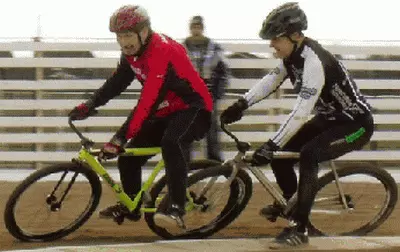
The Nomads had decided that they would begin to travel as a team and for their first challenge they travelled up to Edinburgh on 22nd April 2012 where two matches were held, with one success for each side. There was no doubt that several of the Newcastle lads still looked quite tasty on two wheels and this was to prove only a beginning.
As the season progressed successful challenge matches were held all over the country and the club decided that, despite their original intention of being a social cycle speedway club only, they might just consider some form of league racing for the next season. The obvious problem was that a proper track would be needed for such a venture.
As it turned out, their current landlords Cramlington Sports Centre were actually quite enamoured with the super-annuated skid kids and willing to allow a proper track to be constructed. To give the scheme a try, Sheffield Rockets were invited for a match at the end of the season for whichboth an inner and outer lines were created with wood boards nailed tothe shale surface! Sheffield declared themselves happy with the outcome and application was made to the Northern League.
In the end, the league wanted a more permanent solution but have allowed the Nomads to create a temporary flat oval with cemented borders until the schools using the centre close in July when a fully banked circuit with proper fencing and the works will be constructed. To top that, local councillors have come up with a serious amount of money to help with the costs and have promised bikes as well!
The only thing they asked in return was that the team change its name to Northumbria as Cramlington is far from being a Necastle city venue. They readily agreed and decided to go the whole hog and become the Vikings, a traditional North Eastern cycle speedway name, as they were no longer nomadic. The Falcons visited the Vikings for their first home leaguefixture on 31st March this year and a great day out it was.
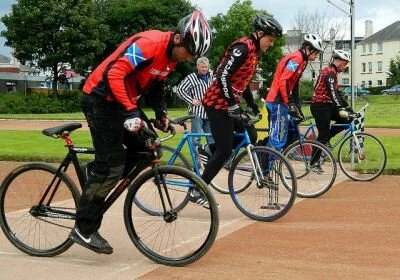
So, two more Northern League fixtures because of the Vikings but also two more because of Astley and Tyldesley from Wigan way. Not a new club but Astley have been mainly concentrating on junior and lower level racing for some time. Great to see them back in the Northern League First Division, in which A team racing is held but also because they can also be sure to bring a team for Second Division racing (B teams) and Third Division racing (under 12), a new andwelcome addition this year.
An expanded league then and less empty Sundays to fill but there is more.
For many years, Edinburgh and Glasgow test matches, between representative sides from leagues in both cities were a staple of Scottish seasons. Sadly there is only the Falcons Redbraes track in Edinburgh now butthere has been no competitive racing in Glasgow for some time. There has always been a track though. For any of you who know Scottish football at all you may remember a team called Third Lanark who left the league in the early 1960s. They played at Cathkin Park just along from Hampden Park and just above this ground, whose terraces and pitch still, in part, remain, is the cycle speedway track.
At the beginning of last season, a party from Edinburgh along with remaining local enthusiasts restored the track and environs and several open and challenge meetings were held. This year regular training has begun with an increasing number of participants and fixtures between Edinburgh, Northumbria and Glasgow are being planned to fill some of the gaps in fixtures. The hope is that next year, Glasgow too will be a Northern League team.
But it doesn't even end there!
A recent success in the Edinburgh and Fife areas over winter has been the indoor Scottish Schools Cycle Speedway League. Last season two teams drawn from the league raced Junior Falcons teams in well received and exciting matches. Now we hear that plans are being made by one of the schoolsinvolved, in Fife, for a full size and complete track in the school grounds which one assumes would be available for other competition, perhaps even of an international nature.
So, at the moment, there is a great feeling in Northern Cycle Speedway that the future is bright. We have some excellent senior riders, including British champion Andy Angell of Hull riding in our First Division, many youngsters making the step between junior and top team racing under the wing of steady time served club men in the Second Division and our excellent new Third Division where the youngest riders are getting a chance to compete against others of their own age and standard.
PRODUCER GRAHAM SUTTON REFLECTS ON THE SUCCESSFUL ELITE LEAGUE SERIES ON SKY SPORTS posted 27 March 2013
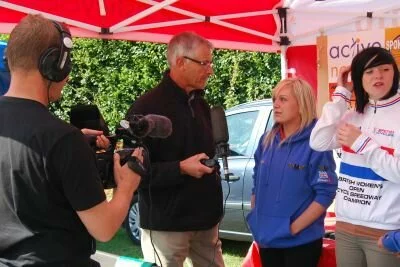
Firstly congratulations Graham on the success of the Sky Sports series. You must be delighted with the response?
Yes the response has been very satisfying from within our sport and from feedback gathered along the way.
I would point out the primary purpose of the series was to put cycle speedway "out there" in the sporting media in the hope of gaining the attention of new people, new locations and maybe even new countries, given the worldwide distribution of
the programme. The TV group would be truly delighted if we were successful in any of these respects.
So how did the idea of an Elite League television series come along?
Essentially from conversations between Joe McLaughlin and myself after our coverage of the 2011 British Final in Norwich. We both felt that with the right ingredients, team racing had the potential to provide a good TV spectacle and I think we got it about 75% right.
Team racing does have a certain "edge" but I would like to see a bit more focus around the pits area and maybe more sound bites from riders between heats if we do it again.
Who have been involved?
This has been a100% in-house cycle speedway project which Joe and I got underway around 12 months ago following a successful meeting with Proactive Television who produce the weekly magazine "Sports Unlimited" for Sky.
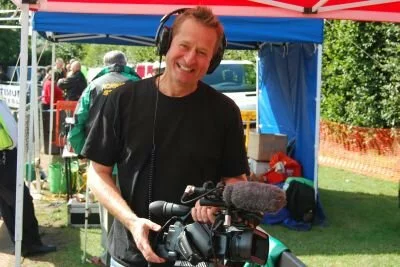
Joe's commercial expertise secured funding from the BCTG group and I then organised a meeting with Rob Haywood (pictured above)and Nigel Leahy to scope production of the series. Rob was contracted to film and edit the programmes and Nigel provided design and technical support.
Nigel, Ian Brown and Simon Gamble all filmed with camera 2 along with speedway colleague Pete Ballinger of Clean Cut sports who did some good work at the three Midland venues.
How did you select the matches?
I wanted to give each of the Elite League clubs the opportunity to stage one televised match and at the same time create a series by telling the story of the title race.
Wherever possible I tried to pick out what I thought would be a competitive match at each venue and with the odd exception, I think we succeeded. Luckily, the league title was decided on the very last day of the season and we were there to capture it.
How much did it all cost and how long did each programme take?
The budget was very tight indeed, in fact not much more than it would have cost to have just one event professionally filmed and edited. Fortunately, we were able to produce the series during some of the seasonal down time in Rob's Venture Video business which is centred around weddings and family events. With his cycle speedway background, Rob was keen to be involved and gave us a really good deal.
Time-wise, it took me about a day to view raw footage and write the edit script for Rob who then spent one or two days piecing the programme together. Finally, we spent one more day polishing up any rough edges and adding my commentary.
Did you experience any technical difficulties?
That's a very good question! We thought we were fairly well up the learning curve after our previous projects but had a rude awakening as we constantly strove to meet the exacting standards required to overcome the various hurdles that presented themselves right up to the last programme which had to be re-edited in full due to unforeseen technical problems. Overall, it was a very challenging project but we got there in the end!
Have the producers ProActive been pleased with the results?
The first thing I would say is that Rob Barry and his colleagues at ProActive have been very supportive in helping us to achieve the standards required by Sky and the door has been left open for further coverage of the sport in 2013. Although nothing is
fixed at the moment. I know that Joe has been working hard to ensure that sufficient funds in place for the British Final and I am confident he will make this happen.
What's happening currently?
Rob and I have been working on some small re-edits of the seven finished programmes in readiness to upload the series to YouTube. Match One has already been posted and the rest will follow soon.
So what does the future hold for the TV Group?
Critically, its all about funding. Joe has it on his busy agenda to seek out another backer and Vic Haines has also undertaken to check-out some of his commercial contacts in the world of cycle sport.
As for further coverage of the Elite League in 2013, this will very much depend on whether either of these gentlemen can come up with the goods or alternatively whether individual clubs can generate a four figure sum from local sponsors to cover matches on a one-off basis. The same applies to the World Finals in Australia. If someone cares to find a sponsor and arrange for it to be filmed, send me the tapes and I'll arrange the rest!
COVENTRY CHAIRMAN REFLECTS ON TRANSFORMATION - posted 21 February 2013
Coventry cycle speedway club has undergone a major transformation in recent years. Just like the mythical Greek phoenix bird, Coventry CSC has literally risen from the ashes and is now flying high on all fronts.
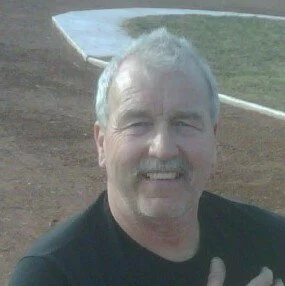
Here, Spokesman-Online interviews Coventry chairman Dave Foster. A man whose has been around the shale tracks of Coventry since the mid sixties, Dave has seen it all. In a wide-ranging interview, Foster gives a revealing insight into how Coventry hit major problems, regrouped and against all odds, are now stronger than ever.
Thanks for giving us this interview Dave. First of all, how did you get into cycle speedway?
It was in the mid Sixties and the sport was booming in Coventry. There was a thriving local league in those days, when motorcycle speedway was very popular.
Which teams did you ride for?
Bedworth, Warwick Royals and Earlsdon Hammers
Personal life?
We have settled just outside Coventry in a village just over the border in Leicestershire. `We` being my long term partner Dawn and 14 year old son Robert, who has showed a keen interest in racing but was injured for most of 2012.
We hear you play in band?
Yes, they are called `Rough Edges`. Its me and my friend Ian, and sometimes Paul Turner, ex Earlsdon Hammers, joins us. We gig around the pubs and clubs of Coventry. Nothing too serious but we enjoy it.
How did you get involved in the current Coventry cycle speedway club?
It dates back to 1978 when Pete Averns and Geoff Lees formed Coventry at the present Hearsall Common track. I rode for a few years, disappeared and returned to manage for a year or two. Interest then dipped as several of the team got married and others landed good jobs, resulting in the team folding in 1994. It was a great shame.
And what happened next?
Nothing for years. Then out of the blue, I was contacted about a re-union match for former Coventry riders at Wednesfield in September 2000. It was only meant to be a laugh, a re-union. I remember we all met up and went in a limousine. Thats got to be the only time its happened in cycle speedway history? Robin Wallsgrave was there and people like Ian Batley, Steve Bromwich, Dave Frith, Mick Docker and Mark Drage. Then, afterwards, Roger Ellis invited us out for a drink or two! Well, the ale certainly flowed that night and we all got hopelessly drunk. It was a brilliant night never to be forgotten.
A proper return to racing then followed?
Yes, after the re-union we engineered a full time return, joining the Midland League and then the Premier League. A tremendous number of former local names came back to the sport, people like Jez Hughes, Rob McGuire, Les Grimes, Rob Hardie and many others. We unearthed lots of our own riders like Ben Davies, Myke Grimes, Matthew Lawrence, Sam Hardie and Ashley Pointer. Times were good. I am pleased to say all of these names are still involved at Coventry, to one degree or another.
The club then won the right to stage the 2005 British Final, changing the way the final was staged and promoted?
Yes, we reached such heights with that final. It was the first time ever the final had been filmed for Sky Sports and so many people turned up we almost could not cope. People resorted to standing on the grass banks by the road in trying to see. We always had a vision of promoting a snappy, glitzy, and yes glamorous showpiece final, that all the sport could be proud off.
Of course, the British Final is about finding the British champion but if it was just about that, then why not stage it in Grimsby at 1am in the morning? The way we set out to do it, everyone won. We are proud that to this day, people still refer to the `Coventry final` in glowing terms. Its become the benchmark on how to promote the biggest event of the year.
April 2007 and subsequent events. What happened?
Thats now been excised from our minds. We don`t mention that at Coventry now. I will only say, for the continuity of this interview, that it was a fatal blow and the Coventry club were in ruins, save for a continuing nucleus of determined friends who kept a limited structure in place and had fading visions of some sort of limited activity once again taking place at Hearsall Common.
You mentioned some of the old riders earlier and how friendships had kept the flame alive. How important are these friendships now?
They mean a great deal to us, both for the club but more importantly for us as individual friends. These friendships transcend the club and the sport. We are friends away from the club. I suppose as we have all got older together, these friendships mean more to us.
These friendships, this bonding, has obviously helped the remarkable revival of Coventry?
Without a doubt, yes. Some of us just would never give up hope of a revival, even in the dark days of 2008, 2009 and 2010. I think it was Jez Hughes who first adopted the phase, which sums it all up, by saying: unity is our greatest strength.
This is a remarkable story of friendship. Who are the people involved?
There a group of six or seven of us. People like myself, Jez Hughes, Rob McGuire, Dave Frith, Steve Bromwich and Joe McLaughlin. You can add in Norman Venson, who although still very much a Leicester rider, lives in Coventry and supports us so very much.
Tell us more about these people?
Well, lets start with Jez. He came back to us in 2001 and has been a great help ever since. Jez is the sort of diplomat amongst us, rarely does he get ruffled. He struggles to get down the track as he` such a busy guy but he does what he can, which is a great help.
Turning to Rob, he was a fine rider in his day but now sadly struggles with his health. He has multiple problems and its sad to see him on a `bad` day, when sometimes he can`t make it to a match. Rob inspired some wonderful refurbishing works at the track some two years ago, getting Community Service people involved to literally strip all the weeds off a very overgrown Hearsall Common.
One of this sports true unsung heroes is Dave Frith. He goes about his business so quietly, never making a fuss. He`s always nipping up the `Common in the mornings cutting the grass, that kind of thing. He also does great work with the juniors. Steve used to manage Whitley and until very recently served as our team manager for a decade.
Steve is another whose not in great health these days but again does what he can to do his bit. Norman, everyone knows and despite all his service to Leicester, he`s increasingly devoted time to our cause, particularly on our `Club Nights` last summer when at times we were almost over-ran with kids. Norm speaks to the kids in a language they understand and they respond so well to him. He also bolsters our senior team frequently, making us competitive.
How did the revival take place?
We held a match against Birmingham in May 2011. We borrowed several riders to help field a `Coventry` team. We hoped that it might spark some interest and it did! Lots of local youngsters suddenly appeared. We soon held up the senior match to stage scores of junior races.
How was this followed up?
We asked all these new kids this question: If you turn up a week tonight, to ride together for Coventry, in a junior match against Birmingham, are you interested? They were all interested.
And did this match actually happen?
Yes. It was somewhat nerve wracking waiting for that match to take place. We knew it was crucial to any revival. We went out that week and found sponsorship for eight new junior shirts, with `Coventry` splashed across the front of them. They were fashionable `streetwise` Moto-X shirts.
You know, that was one of the best things Coventry cycle speedway club ever did. When those youngsters turned up, seven of them, and Dave Frith handed out the shirts, making it clear that we had obtained them for their use, it seemed to create a whole spirit of belonging amongst those young people to a club they were just joining. It was terrific to see.
How these you capitalise on this breakthrough?
We organised matches, lots of them, with programmes and PA systems. Proper matches. We organised ourselves. We held meetings in the local pub, inviting all the parents. The response was terrific. Now, Richard Burnett, Dawn McCarroll and Karl Slatter, and other parents, play leading roles within the club.
This led to a full time return to Midland League racing last season. Going back 12 months ago, how was this decision reached?
With great soul searching! It was a gamble really. Would all the new juniors return after last winters break? Then, the thought of a senior team for Midland League Division One seemed out of our reach, even as late as last February, on the eve of the 2012 season. The last thing we wanted was to enter the league and then withdraw. That would have been disastrous. But it was all a gamble looking back.
Dominik Rycharski agreed to return on a full licence and that helped. Then we signed Konard Pietak from Poland who lived next door to Julia Knas, Joe`s wife. Then Paul Janaway appeared after moving to Coventry. Myke Grimes promised to ride in all the Midland League division one matches if we could raise a senior team. Tom Sensicall came on board as well but he had limited availability.
Of course, we had Dave and Joe, and Liam McGuire, who is so very keen, so we were nearly there but because of work commitments, and football, we could have been down to just four of them on a `bad` day. We went to the league and we obtained a special ruling to ride Mark Winwood, a great friend of the Coventry club, and Norm, together with Lee and Joe Kemp, who had started at Coventry. It was all still a massive gamble but it paid off in a way we could never have imagined.
How did the season unfold?
Well we went down to an agonising defeat in our first home match but we were competitive all season in most matches. We were never going to win many matches but that was not the point. The main thing is we completed all our fixtures (save for one junior match in October that was rained-off and no date could be found to restage it).
We even turned up, in our last match of the season, away at Wednesfield, with 12 different riders but missing six first choice riders. We rode a completely separate junior team in every single Midland League Division Two match, which was amazing. All of our juniors now have their own bikes.
Who were all these juniors that rode in every match?
James Kirrane is the pick of the bunch. He gets stuck in and is really fast now. Calum McCarroll is now making great strides after a hesitant start. Jake Slatter is now improving in fine fashion. Spencer Sawbridge came to one of the early BJYL rounds, bought a bike the week after and is one of our keenest lads. Adam Dickinson lives just down the road from the track and has also improved since Norman got him his own bike in July.
Sam Slatter is just nine but again shows great promise for the future. Macaulay Burnett has been a little sidetracked after starting his first job but `Macca` has tremendous natural ability. Many of these lads` parents now play an active role within the club. For example, Darren Sawbridge, father of Spencer, is now one of our major sponsors, with his company, BMS Ltd.
And the highlights of the 2012 season?
Completing all our matches and just seeing Coventry back in the league. But the biggest highlight was the increasing numbers attending our Wednesday evening `Club Night`, aimed at new riders. We kept promoting it, and Dave, Myke and Norm supervised it. This prompted another tremendous surge of newcomers into the club.
Tell us about these Dave?
In a matter of weeks we had Josh and Sammi Marsh, Daniel Drewett, Ollie Morris and Shaun Reynolds join. Within days, they all had purchased new bikes and are really super keen. Some of these lads have terrific promise. Another bonus is that all their parents have also joined and they already contribute enormously as volunteers.
Lee Marsh is now our manager and Andy Drewett is our new junior manager. Mike Reynolds and Dave Morris have really chipped in at our regular winter track work sessions and have helped out greatly at our tremendously successful indoor events. Even right at the end of the season, we picked up two more juniors in Charlie and Billy Bloore, along with their father, Richard.
The sport will see the British Final at Coventry in 2013. How did that happen?
We were determined to land the final. One of our members attracted a £5,000 grant, and lined-up approaching the same amount in sponsorship, just for one meeting, which is a colossal sum in an amateur sport.
Our thinking was that we had done so much in our revival, just one thing was missing. We enjoy a great reputation within the sport at Coventry for our major promotions. What better way to put the seal on the revival by way of staging one of our promotional blockbusters? You will see this in full effect, better than ever, this coming August!
Not everyone was happy that Coventry were awarded the final?
Naturally, our good friends at Wednesfield were disappointed but save for some unofficial mutterings on `facilities`, people like Paul Bodley, Roger Ellis and Dave Jewkes have been true to their word by promising to support our efforts. People may reflect we were awarded the final by the Midland clubs by a very large majority vote.
There`s only been a fleeting mention in this interview Dave on Joe McLaughlin. Where does Joe fit in now amongst all this unrelenting good news from Hearsall Common?
I think everyone at Coventry CSC would agree that Joe is the glue which holds this whole thing together. His enthusiasm is unbounded and he has remained motivated when many of us, bowed by the events of recent years, would have been content to walk away.
Joe never allowed us to lose our love for the club! Everybody knows Joes promotional ability and his knack of getting companies to part with large sums of cash, but those of us who have known him for a few years will witness a completely different side. Its true to say Joe does have a private persona which few people get to see. Some also forget that he was also a pretty useful rider in his day and still shows flashes of the old magic despite his years! Joe is a unique character thats for sure!
Finally, going back to the British Final, what can we expect?
DF: A slick, snappy, glitzy, glamorous event, promoted to a professional level, made for TV, with a huge crowd. The Coventry way! Tell your friends, come to your first meeting in years if you have drifted away from our great sport and follow the crowds to Hearsall Common for a memorable showpiece occasion.
Thanks for the interview Dave and see you at the British Final!
LAUREN JACOBS REFLECTS ON AMAZING YEAR posted 2 February 2013
2012 was an outstanding year for cycle speedway's top woman racer. Ipswich's Lauren Jacobs crowned a memorable season by winning both the European and British titles.
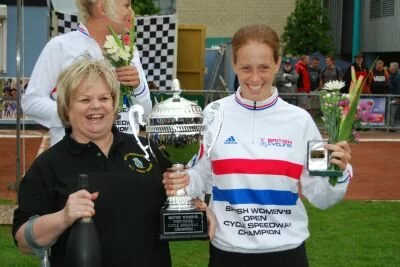
For the past seven years the 23-year-old team leader at KFC, had a dream to become womens national cycle speedway champion. Since finishing third at Leicester in 2006, its been the Ipswich riders ultimate goal. She has been close, very close, agonisingly close so close that shes stood on the victory rostrum four times without ever standing on the top plinth.
We caught up with Lauren at her Ipswich home to ask her if she thought shed ever win the womens title and what her plans are for the future. Heres what Lauren had to say.
Firstly Lauren how and when did you first become involved in cycle speedway?
My brother rode for Great Blakenham and when Ipswichs track at Whitton opened in 2002 I went for a training session with him.
Which riders inspired you in those early days?
Dan Pike
What was your first individual honour?
I think it was third in an East Anglian under-13 event and then first in the Suffolk Womens event.
You won the national title at your seventh attempt at Newport last August and finished in the top three four times without ever winning the main honour. Did you ever think youd shake off the bridesmaid tag?
No, I didnt think I was going to win it as a lot of girls were going well last year.
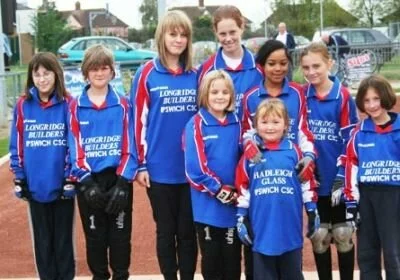
And what about team events?
I love team events. It makes you feel happy to be part of a team, and gives you something to work towards to make sure you get picked for the team.
What would you say are your strong points?
Racing in pairs in the Womens league and training.
And weaknesses?
Racing at small tracks, I dont like small tracks.
You won both the European and British titles this year. If you had to choose, which one would you pick?
The British title as I have been trying to win it for many years.
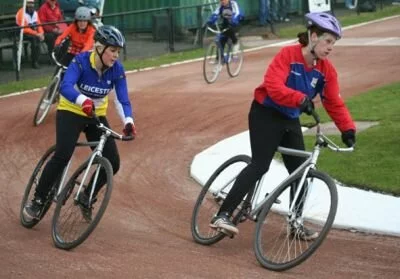
Who do you see as your main challengers in the womens game and why?
Lauren Davies. She is a really good rider and she is always consistent and hard to beat. Also Danielle Riley, Lucy Whitehead and Vicky Brown as were all about the same level in the sport.
What improvements would you like to see in women's racing?
More girls racing and just more girls events.
You are in the GB womens team for the 2013 Worlds in Australia. What are your thoughts ahead of the event?
Im really looking forward to it. I think it will help a lot of the girls bond and get along with each other more.
Do you do any other cycle sports?
No
What sporting ambitions do you have?
I want to win the British again this year and hopefully comeback from Australia as World champion. I would also like to race in the Olympics one day.
LAURENS NATIONAL WOMENS CHAMPIONSHIP RECORD
2006 Third at Leicester
2007 Third at Horspath
2008 Third at Poole
2009 Second at Bretford
2010 Fourth at Hull
2011 Ninth at Hethersett
2012 Champion at Newport
BIKES AND CLOTHING
Reflections from John Whiting - posted 11 January 2013
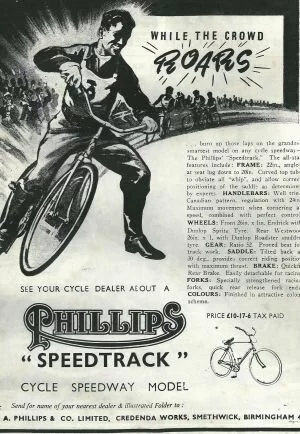
My first bike had 46/24 gearing, shortened motorcycle bars, heavy Westrick rims and a couple of well-worn Avon tyres. It did the job till Keith Lumb of Gorton passed me and the bike fell victim to the trauma and duly collapsed. Frames were sourced from anywhere, certainly either someone you knew or a stripped down road bike.
An advert from the early Fifties for the Phillips Speedtrack bike
Moving to Blackley gave access to the Graham Gleave Cycle Speedway Emporium, where Josh was able to provide most parts including wheels. Forks were straightened by you, a couple of pieces of wood and a large hammer or a piece of scaffolding. I think only Ken Taylor retained the normal forks as supplied.
Biggest issue was cotter-pins. Almost every rider had their cranks off-set, with lots of filing and occasionally welding to retain the optimum off-set. Still the pits abounded with the sound of much hammering each match as they moved. The quality depended where you bought them. It wasnt unusual to snap bottom brackets as well.
In the late 60s salvation arrived in the form of Stronglight cotterless cranks, bought from Harry Halls in Manchester. Though I managed to snap a couple of those, Harry always changed them. The issue here was that they were dead straight so everyone ended up on level cranks. Derek Garnett heat-treated his to retain the off-set, while I think Vic Hinchliffe retained his old cranks till he retired. I also think Joe Williams had some splined cranks, but these didnt sustain the pressure at the gate.
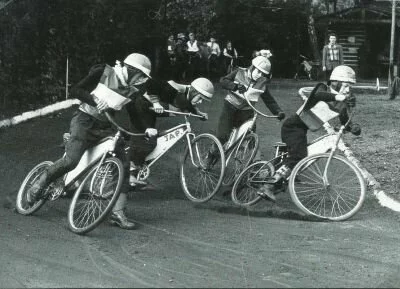
Cycle speedway bikes have come a long way since the late Forties when kids emulated their speedway heros.
The gear generally was 32/18 with seven inch arms and changed to 34/18 for the bigger tracks. The Scottish riders generally pushed 32/18 and seven inch arms, very successfully as did Alan Miller. Riders were beginning to be more proactive in what equipment was used. Dave Wilson found some lighter but stronger rims and also had spares, unknown. Dennis Torr took the next step by having a custom-frame built by Neil Orrell, although not too sure about the colour. Chroming was also becoming very popular with lots having chrome forks, and any colour of frame. Handlebars were generally flat (Scotland) wider in the South with the North taking the middle ground. Not many have them as high as Norman Venson, Darren Slater and now Paul Heard.
The early 70s saw John and Mike Baugh arrive on the cycle speedway scene, along with engineer Dad John Snr. John looked at what was available and spent some time in the ubiquitous garden shed and started to turn out handlebars and stems, 7 stems for the saddle, later on plastic pedals but much joy as the offset bottom bracket became available. Most riders welcomed this opportunity to get that quicker start, and in reality the six or eight degree that was the norm didnt have a lot of effect. I preferred just four degree whilst the 18-degree of Steve Crook and Dave Garnett of Woodside wasnt everyones choice. Think my biggest regret is getting rid of bottom bracket in the late 80s.
It wasnt long before the first Ace frame left the production line, followed by the Ace Ultra. There certainly cant have been many riders who havent ridden an Ace frame, Ive still got four! The Ace Cycles van was always in demand around the tracks and all the big events, which probably didnt help Mikes racing. There were also Crown frames, but the angles on these didnt really suit CS, but they did come with straight forks.
Mike Baugh - always leading in cycle speedway circles
Other riders, Vic Haines for instance, and clubs were looking to discover and source new equipment. Riders like Dave Hemsley had his frames built to suit him, and probably the first to have Campag on his bikes, whilst Drew Jackson used two bikes, both set up the same one with shorter cranks. Tracks were becoming much faster as surfaces changed and different shale to Arbury was found. There had been a huge fright as Avon discontinued their tyres, and the sport looked in real danger for some time.
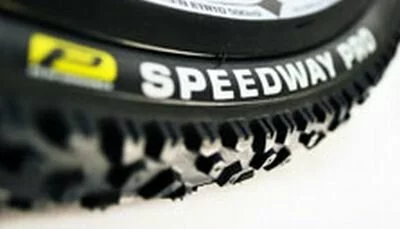
A modern day Speedway Pro tyre
Swedish manufacturer Varnomo looked likely to take over the mantle, however they got into difficulties and Trelleborg took them over, slightly amended the existing tyre and produced the excellent tyre we have had for a long time, which proved to be every bit as good as Avons. The sport breathed a sigh of relief. The moulds have now been destroyed, so the search is on for replacements, hence the ever growing interest in the MBX world.
Over the years gearing standardised at 33/18 for all tracks and still appears the case now. Long Eatons Pete Young started to look at the Mountain Bike options and built customised frames for several riders, certainly Ray Oliver, Dave Frith and Neil Mason were very successful on them, whilst Neil Howarth still has his. This probably generated quite a change as gearing had to be amended to reflect the bigger tyres and smaller wheels, and different handing aspects of the bikes.
The presentation of bikes had also vastly improved, with smart colours, the odd team having all their bikes the same. All components were being looked at as riders began to look at the wider picture. Frames were generally re-sprayed each year, (many thanks to Kev Greenhalgh!), as the sport moved very much into a more colourful era.
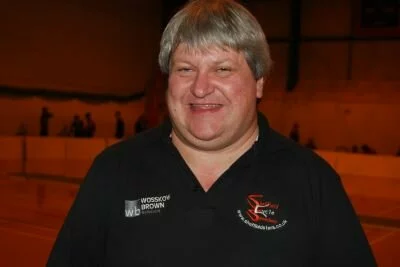
Shaun Hudson - owed a debt of gratitude
Time passes and changes happen and our chief CS suppliers had moved on. This left a huge gap in terms of parts, components and clothing for CS, Shaun Hudson (pictured above) and the Trackstar company deserve a great deal of thanks for keeping the sport alive, custom frames, gloves, pedals , wheels, tyres all supplied just when the sport needed them. Mark Rushby at Pedalsport also imported some frames and handlebars as riders were forced to buy secondhand.
Help was its way as Archie and Karl Wilkinson returned to the CS fold and with their expertise quickly launched a full range of equipment. Frames were in short supply and were snapped up to meet demand. Coloured rims, blue, red, yellow, and nowadays pink for the ladies are the norm (pictured below). They are now the sports premier supplier; however the sport has not sat on its laurels. The invasion by the Polish riders with their different gearing and frame set ups created a lot of interest.
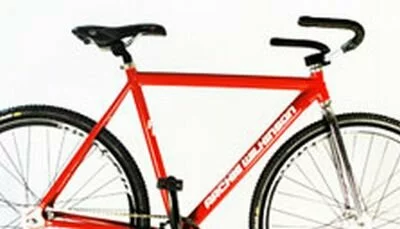
Lukasz Nowacki has been very proactive in looking at alternative suppliers and options, while Steve Harris and Andy Angell have been prominent in challenging the normal set ups. This has been really good for the sport. Different wheel combinations and tyres, now changes to gearing, smaller frames as Craig Harcourt used successfully only help to make the season exciting.
From the machinery to the clothing. Usual attire when I started was jeans, a long-sleeve top and old shoes or cheap ones from the market. They were usually leather soled and would slip on the rubber pedals we had. The solution was Blackley tape, named after Connellys of Blackley and not the club. This was really good although it made a mess of yours hands and gloves as it was used for handlebars as well. Complete with breastplate, you were now a NASCA rider. The rival Federation were insisting on black jeans and tops, all-black shoes plus a breastplate, quite modernistic for those times.
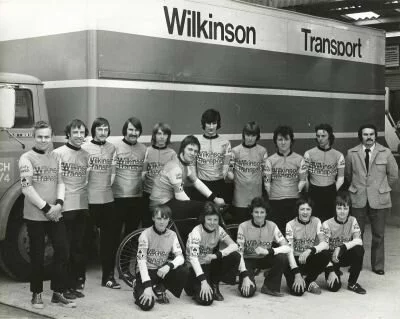
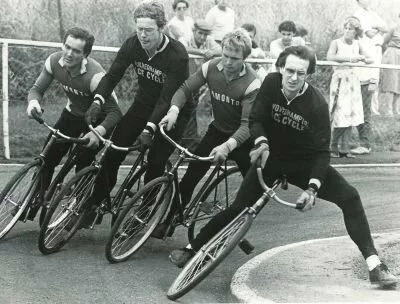
The famous Galley Pirates were one of the first clubs to switch from breastplates to cycling jerseys and the first to attract a national sponsor, Wilkinson Transport. How smart they look in this photograph taken in the mid Seventies.
I then discovered Dunlop trainers. Im sure Im not the only rider to test trainers in sports shops to see if they would be ok for gating, before the Samba came in, whilst some like Watchman and Hubble always used the SIDI racing shoes. Further and a vast improvement was that clubs were beginning to race in uniform tops. It quickly included same colour jeans and then the first training bottoms were introduced. Much more flexible and looking more the part for cycling.
Shirts were being designed and becoming affordable. Gibbsport of Salford were a really good manufacturer, as are Impsport and the materials became much more breathable and user friendly. Designs changed and the continued development of dyes; printing techniques; and the opportunity to make the sport more vibrant have contributed to a much more colourful spectacle.
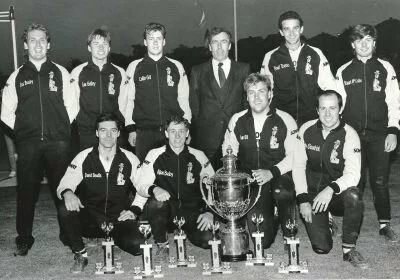
Few teams were better attired than Thurrock, pictured here in 1986 celebrating their national team champiionship success.
Steve Mullinder and Dash Trophies have produced a great range of clothing, while with the introduction and continued influence of the ladies racing the sport is going to remain more colourful. All credit to the Australians who have given the opportunity to design the 2013 champions jersey, amazing as itll probably be a British winner, your opportunity to become famous.
While no doubt the changes to tracks, equipment and clothing have been fundamental to the sports changes, perhaps the biggest change is the riders themselves. The move into British Cycling has produced a lot of negativity, some of it deserving, but it has also produced some very positive features, number one being the club coach. BC has challenged the old attitudes and encouraged people to become coaches. Ex-riders and current riders, John Burston and Lee Aris for example have a lot to offer the sport and BC are providing the tools to help that passion develop the next generation of riders.
The sport is becoming faster but still retains a necessity for skilful and thinking riders. You cant race around Horspath or Sandwell the way you would around Wednesfield and coaches are now playing an ever increasing part in conditioning riders, ensuring bikes are set up correctly, although I could never race on Fred Rothwells bike. Its not only skills on the bike but conditioning off it, be it gym work, road racing or even a trip to the local Velodrome. Diet is also important and self- motivation is not easy if you are riding around a track on your own. The social networking sites and the estimable Spokesman-Online are full of riders who are already training and setting their goals for 2013 and possibly beyond.
Fascinating days ahead. Good luck everyone for 2013.
A Spokesman-Online Christmas Special
John Whitings
ALL TIME TOP TEN
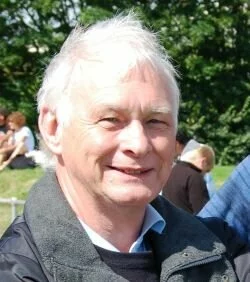
The first thing to remember on reading this article is the clue thats in the title. Its my top ten. There is no wish to disrespect anyone. Ive been racing since 1966 and seen most of the really good riders throughout that time. Without doubt other readers will have a completely different top ten, and in lots of cases wont even know or be able to rate my choices.
Now to collate a top ten is easy. Just look at the record books and list them one to ten on the titles they have won. Ive taken a slightly different aspect, and Ive tried to build mine on their contribution to the team, rather than individual glory. So here goes and in no particular order, so dont get upset.
Number one, isnt one. Its three, and fairly obvious really - John Watchman, Kevin Greenhalgh and Derek Garnett. I rode with all of them. Ten British individual titles between them and it should have been more. John Watchman (pictured below), a bustling gater, elbows, great balance and drive, super team rider who would ride for the team, a real pleasure to watch on the track.
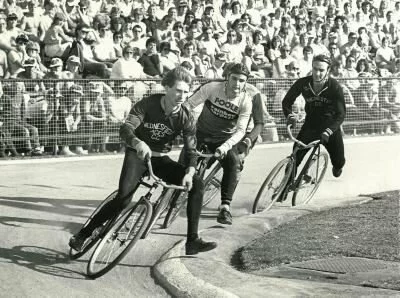
A rare picture indeed John Watchman trailing last in the 1983 British finals at Ashmore Park, Wednesfield. Always resilient and never beaten, Watchman recovered to take the bronze medal behind Manchester team-mate Les Bowden and Bristols Allan Miller in the days when cycle speedway could really attract a crowd!
Kevin Greenhalgh (pictured below), a great captain, brilliant team rider and I really feel somewhat overlooked. Just look at the records and see how good Kevin was. I always felt he retired far too early. The first ever rider to defend his national title, he could race at any track comfortably, and contributed hugely to Blackleys s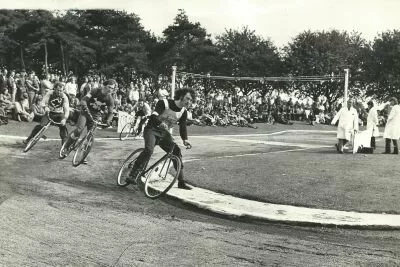 uccesses. uccesses.
History in the making. Kevin Greenhalgh became the first rider to successfully defend the national individual title. Here he is seen on his way to winning his second title at Sloughbottom Park, Norwich in 1974.
Derek Garnett, so long the leading light at Offerton, in a team which effectively had one scoring pairing Garnett and Hardy, a great individualist in Hinchliffe and a levelling pairing in Lawton and McKenzie. Yet that team were brilliant and dominated racing for so long. Dereks not a gater, but probably one of the finest passers the sport will ever see and that on a bike that most of todays stars wouldnt be able to pick up! When he came and signed for Manchester, it turned out to be brilliant, both for Derek and the team.
Jimmy Varnish, twice British champion who won titles at all levels, even coming back after a few years away and clearing up the vets at Astley. A strong gater who motivated the Birmingham team for so long. He had great skills, both from the gate and from the back, a quick starter but who was equally at home sitting in for those all-important third places that win matches. The move to close rivals Wednesfield proved beneficial for both parties and his results and attitude to the sport were an example to all. Jimmy still has a huge amount of respect throughout the sport, going along with a lot of popularity. Everyone was rooting for daughter Jess at the Olympics, and the disappointment was as much for Jimmy as well as Jessica.
Alan Guest. If it went on results Alan wouldnt be here. Astoundingly he never won the British individual, yet for two or three years he was the man to beat. A tremendous racer, good from the gate, sublime passing skills, and made a great pairing with Pedley that contributed tremendously to Wednesfield s successes over a long period of years. As previously stated Alan was Rider-of-the=Year on several occasions, but in my opinion his standout performance was the English League Riders championship at Sandwell. A downpour delayed the start for an hour and made the track difficult to say the least. Guest put together five fabulous rides and just made total light work of winning against very strong field, business as usual for Alan.
Lee Aris (pictured below). Four times British champion, desperately unlucky not to be World champion at Bury and a leading light for Wednesfield for many years. This year has not been Lees best by far, but as a motivational club captain for the club and also for England there have been very few to match his exploits. A strong rider brought up in the traditions of the Ellis and Dad Micks ethos, that the club is what the sports all about. Lee has shown on many occasions his individual skills and also his enthusiasm and commitment to bringing in and working with new riders to maintain the standards of his only club. Ethics, not many riders would withdraw from the England team, knowing that their usual high standards had slipped a bit, and that other riders were going well. 10 of 10 Lee, I expect to see you back next year back at the top.
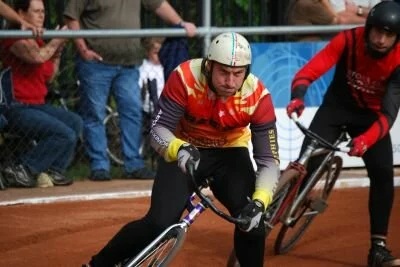
Dave Hemsley (pictured below). You couldnt really leave Dave out of this could you five British championships, World champion, European champion and numerous individual honours. Dave contributed so much to cause of Leicester. Much like Hinchliffe before him, the team could afford to let him go out and win matches just by the amount of races he won. His attention to detail and to having the finest equipment is legendary. Dave has always been completely focused on winning and achieved so much individually and for the Leicester club.
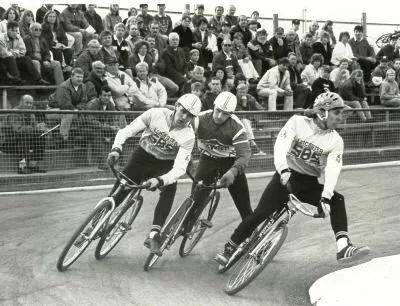
Colin Wheeler. Despite forays out to Poole and Bristol, Wheeler has been the mainstay of Southampton for many years. Probably without Colins commitment the club may have folded on several occasions. Twice British champion, and many victories in the English lLeague Riders, Colin was the typical strong cycle speedway rider. Whenever you thought you had him beat, Wheeler would produce that last burst on the final bend and nick the victory. Typically a big track rider but could adapt well to the smaller tracks and raced well everywhere. Son Gavin rides nothing like him, amazing.
Clive Hurrell. Why you may ask, no British titles, no ELR titles. Its sometimes not about the results but how you achieve them. Clive wasnt a great gater. He wasnt a hard rider though more than capable of looking after himself. He didnt dispute decisions with referees. He just got on with his racing. Hurrell produced some of the finest passing Ive ever seen, on a par with some of the real greats, Garnett Watchman and Guest. Through gaps that didnt appear to exist, Clive was an inspiration and for so long, the King of a very vibrant East Anglian scene. Such a pity that none of these skills are on film to show just how simplistic it can be to pass a rider.
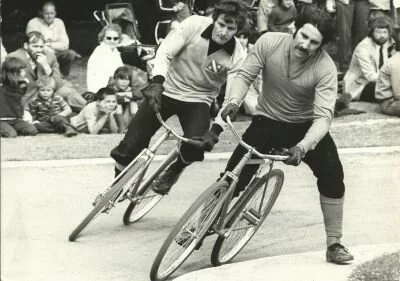
Gentleman racer Clive Hurrell had perfect balance and it took a good rider to beat him!!!
Last but not least and this took most of my time. I couldnt split them so my tenth place goes to John Murphy and Chic Mackie. Results wise John had a fair few successes either under the Scottish or Irish banner, but its the enthusiasm and commitment from these riders in still racing after many years in the sport. Theyve helped to keep the sport alive in Scotland when all seemed lost. They have a huge army of friends and admirers in the sport. Chic has raced at all the Vets events this year, including Exeter and Southampton, I dont know what terms Fred Rothwell and Kev Smith have agreed with them but I think its just an out and out love for the sport. Without these committed people the sport would have died long ago.
This was so difficult, Norman Venson, Pete Young, Mick Aris and Roger Ellis, Colin Simmons all fit into this category, along with Terry Norman and Darren Kent as well as the late Ade Gale. For these people it was all about the sport.
So the arguments can begin, no Harris, Boaler, Jackson, Gale, Hepworth, Griffith, Harcourt (another who retired too early), the list is endless, but with the Editors permission I will add a little bit more. Foreign riders are now an everyday factor in cycle speedway. Sometime in the near future we may have Japanese riders over here, or we may go over there. However the Sixties saw the arrival of Johan Koudijs and Donald Reiche at the Manchester Grand Prix. In his four races Johan dropped a single point and looked set to take the trophy. However the big Carrswood track caught up with him and he failed to finish, and was fourth. They travelled over to many tracks and many UK teams went racing at Almere and sometimes Amsterdam.
Moving on and Tony Herd caused great consternation when he won the British under-21 title racing for Wednesfield. Early visits to Australia meant easy wins for the Lions but Herd, Fraser, Palmieri and Toye were learning fast and soon these matches became the hard battles that epitomise the Ashes. As Australia continued to learn and to improve, it soon became Gentle and Dissel leading the way, and greater success with Daniel Pudney as a very deserving World champion. Chadwick and Geertson are the leading lights along with several other talented and hard racing riders. They will be training hard for the 2013 matches and indeed have the capabilities to win a lot in their own backyard.
Not only did we have to put up with the Aussies, but the Poles arrived on the scene. Nowacki and Symanski rolled onto the Horspath circuit and produced some dazzling racing, full of skill and commitment. They could certainly gate, with Wozny who on his day was fantastic. However gating isnt everything, and they were picked off by the more skilful home riders. Move forward some years and they now have a World champion in Nowacki, Symanski a superb Euro champion and a whole host of talented riders back home in Poland. Such a pity that we cant have the Great Britain v Poland test matches as Im sure they would make thrilling television viewing.
So what does the UK have to offer? Theres few more Polish riders this year. The Ashes are due later in 2013. Do we have the talent to beat the opposition? I certainly think so. The potential is there Heard, Mould, Johnson have already hugely impressed. Take these along with Carmichael, Timms, Jack and Matt Lush, Radcliffe and Higham, Parish and Hewittson will benefit from hard racing in the Elite League.
Morgan and Smith from Poole, along with the exciting Thomas Reed, Hoyland and Smith from Sheffield, Theres a bevy of East Anglian racers, along with the fast Adam Stephenson from Hull. Whilst Andy Angell was perhaps fortunate to win at Norwich, no one could deny the superb way he retained his title at Newport. Coventry will certainly suit his style of racing and he could be the first rider to win a hat-trick of titles. His will be one of the first names the team management will look to for the Ashes and the future of the GB teams looks very safe.
Finally perhaps one of the biggest changes to the sport, the introduction of ladies racing. In its infancy, it wasnt great, but they have collectively moved the sport forward and fully deserved their Monday at Newport. Im sure with the talent we have they will be showing the lads the way in Aussie.
PROFILE OF A CHAMPION - ANDY ANGELL - posted 13 December 2012
2012 was a great year for Andy Angell, cementing himself into the cycle speedway hall of fame by winning his second British title. Spokesman-online caught up with him to discuss that and many other things - dating right back to the first time he ever rode round a track.
Its the 29th August 2011 and Andy Angells helmet is twenty foot up in the air, tossed in celebration by its owner after it was announced over the tannoy at Eaton Park that Chris Osborne had been excluded in their final race of the day, handing the title to Angell.
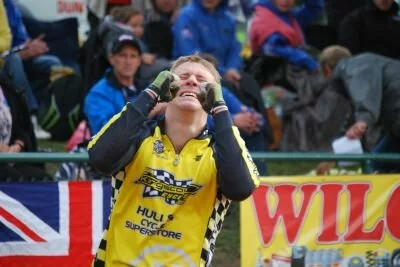
However, two years prior to the day, on the 31st August 2009, Angells helmet was performing its far less glamorous role - its day job. In only his second British Final, Angell was on the receiving end of some fairly hefty bumps and bashes, taking tumbles all over the track. He scored seven points, didnt look as if he deserved all that many more, and came stone dead last.
But two years later he was stood atop the podium in the white shirt. What changed?
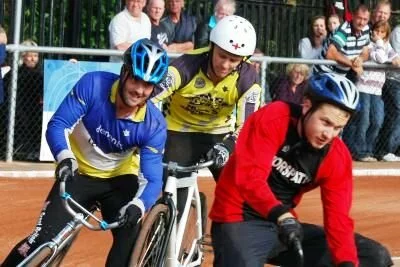
I learnt a lot that day at Leicester (pictured above) which led me into 2010. I had an awesome year, which was down to two things: firstly, training correctly, which for the first time in my career included a very strict winter training programme and secondly, moving to Sheffield, which meant I was very close to Sheffield skipper Dariusz Pilas. He became a very close friend and hero of mine and saw whatever potential was inside me and worked me so hard.
We started with circuit training in the park from January, even when there was thick snow and I thought jeez, this guy is mental! - and that led on to training on track five nights a week during the season. Yes, it was hard and demanding, but it became more apparent as the season progressed on that it was working!
It certainly was working. People started to notice Andy as the months ticked closer to the European Championships in Poland, and by the time the weekend came around, whispers of a shock win were getting a little louder.
I went to the Euros and had an amazing week, being one of only two British riders to star in the European final.
There was one race that really stands out that weekend, on the Saturday night in the Nations Cup at Zielona Gora:
Riding around Ganczarek - thats a race that I really look back on and is maybe my biggest race ever. On his home track under such a loud crowd - that feeling when I crossed the line of almost drunkenness will never be forgotten!
Those that were there that day wont forget it in a hurry either - the atmosphere was almost football-esque as Andy executed the pass and then roared as he crossed the line.
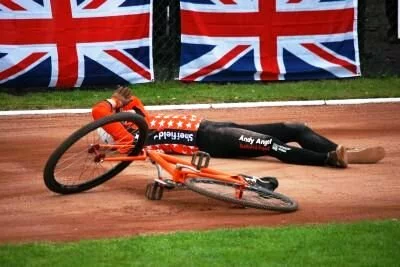
He put down a huge marker that night, but unfortunately two falls in the individual final when leading races put pay to any chances that he may have had of taking the title back to Britain with him. Hed maintain that form though, for the 2010 British Final at Astley and Tyldesley.
For the first time in his career, he was one of the favourites for the win, but was handed the cruellest draw of all the potential winners and just like the Leicester final, he had his far share of crashes. This time though, he accumulated plenty of points along the way and found himself in the run off for second place alongside Gavin Wheeler and Lee Aris.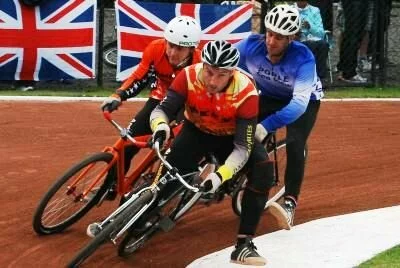
Showing his class and proving his worth ahead of future battles, Angell gave the performance of the day in that run off, gating round Wheeler before passing Aris in one of those moves that briefly leaves the crowd silent as they digest what theyve seen, before breaking out in awed applause (pictured above). But, in his endearing style, Andy remains modest about that day.
After only ever dreaming about finishing in the top three in a British final, especially at a local track like Astley, I exceeded all my expectations by managing to finish second! I was over the moon with the result, but I still wanted more...
He would get it.
Andy started riding at Hull when he was a youngster, after manager Andy Schofield spotted him racing round the track with his Granddad by his side: I was out with my Granddad one Saturday when we found the track and he timed me on my BMX over four laps. After a few weeks Andy saw us down there and suggested we came to watch the match the next day - down we went, I raced in the combination match afterwards, and have never looked back!
Still in his teens, Andy moved to Sheffield and got his first England call up: There was one particular weekend during my first full season at Sheffield where Id been called up to the Home International at Great Blakenham on the Saturday (I remember jumping around in excitement after I got the call from Pete Barnes!) and Sheffield had Poole away on the Sunday. I scored 15 from four rides in the Home International and then 18 from five at Poole, my biggest Sheffield score that season, and I thought, wow, Im getting a lot of enjoyment out of this!.
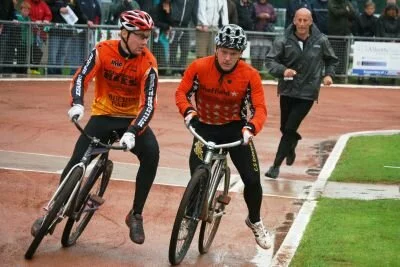
And eventually, all that hard work paid off. Andy won his first British title in 2011 - but, what sets him apart from any other rider in the history of the sport is that he went and defended it in 2012 (pictured above), the first ever rider to retain his inaugural title. 2012 wasnt an easy year for him though.
I trained harder this year than ever before and midseason was in the form of my life - I had a great time in Poole for the Laurels weekend, coming close to winning the individual and winning the pairs with Ryan Hoyland. But then I had a very disappointing European Championships in Ipswich and I decided to take some time away, get back in the gym to build from scratch and managed to get to my best for the British!
And that could well be Andys legacy. His training regime has become famous, and of course hes not the first rider to train as hard as he does, but in this modern world of social media, its perhaps the first that people know all about, and hes inspired a lot of the new breed coming through to follow in his footsteps. Why? Because hes proof that it works. Hes made the sport more professional.
Despite Andys poor showing at the Euros, he still went into the British weekend as favourite, but it didnt unduly faze him - indeed, he was more worried about someone else: There are always nerves when youre the favourite, but some were taken away by the storming season Paul Heard had had!
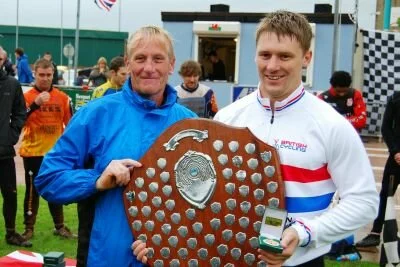
Indeed, Andy thinks things could have gone differently on the day: Paul was unlucky in the final in our race, slipping a pedal. I would have loved to see the outcome if wed have had a full four lap race on such a big fast track! It was almost a surprise to win it again, because as Paul proved, it only takes one slip or he could have quite easily been stood in the white shirt!
Will he retain the title again in 2013?
The treble? Who knows! Its a long way off... But thats the plan. It would seem unwise to bet against him.
IPSWICHS YEAR TO REMEMBER posted 1 October 2012
2012 has been a remarkable year for Ipswich cycle speedway club, pinnacled by their success in the British Club Championship. Whats the story behind their success? How do they manage to recruit so many youngsters and them develop them into top class racers?
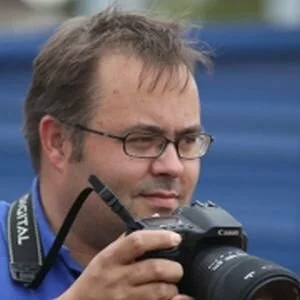
Spokesman put the questions to club chairman Jamie Goldsmith. Heres what he had to say.
Firstly, many congratulations on winning the Club Championship. How does it feel to be the country's number one club?
Given the previous holders calibre, the fact that they had retained it and also that Ipswich Eagles CSC in its current form has only been going for 10 years, its a massive achievement and one were all really proud of at the club for having achieved.
What do you attribute your success to?
The long term commitment from riders and club members alike when club stalwarts such as Tony Stant and Les Fellgett have been involved since the re-birth of the club and along the way others like Dave and Cathy Hill, Ivan Pike and Bill Brooke have all helped to ensure continuity. Seeing riders riding at senior level now that have been here since the start and seeing the pictures of them as young boys and girls in the clubs tuck shop all those years ago, tells the story itself really.
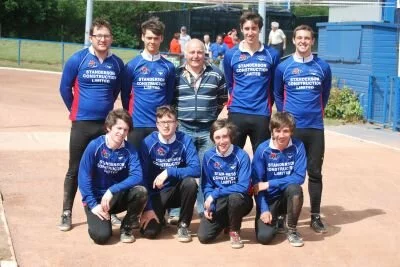
Theres one particular picture in the hut of about 20 plus very young Ipswich riders following a youth and junior event many moons ago. When I mention that the likes of Leon Mower, Jordan Stant, Lauren Jacobs, Laura Dale, Richard Fellgett and Dan Knights are still at the club, it truly shows the commitment.
Did you target the club championships as one if your major goals at the start of the season?
Like every year we always strive to reach the top at any age group. Some we feel we have a better chance than others, but certainly no one had actually sat down and gone through both our potential teams and other clubs to work out the likely outcomes overall, but I do know that one of our members, Phil Clarke, was keeping a close eye on what was needed to be achieved over last weekend.
To be fair we knew after picking up third in the U10s and then winning at both U13 & U16 level followed by a very pleasing second place at U19s that we would be in the mix.
The 2012 championships went down to the wire. Did you feel confident going into the final day at Leicester?
In terms of the senior event, with injuries to both Richard Williamson and Ian Grange having ruled them out for most of (if not into retirement in Ians case) the season, we have good riders in Jamie Chittock, Josh Brooke and Leon Mower, and then we have our up and coming young guns in 16-year-olds Ashley Hill and Lewis Roberts.
This in our minds was where we would either win or lose the Club Championship on Sunday, but at the same time with Poole in the other semi-final all we could do was concentrate on getting to the final itself and hope to finish level or ahead of Poole irrespective of qualifying. At the end of the day, both Poole and ourselves failed to make it through both finishing fourth in our respective semis. This left the mammoth task of taking the trophy and title from the South Coast Club up to our Ladies and they didnt disappoint.
Over the last couple of years the club has tried really hard to encourage girls into the sport and with Danielle Riley joining us this year on a first from Norwich, Laura Dale making an appearance along with first year Rider Lisa-Marie Brumpton and of course ever presents Lauren Jacobs and Gemma Hill (spare a thought for Chloe Pearce another new rider who fractured her arm in two places only two weeks before the event in training), we knew the Womens event would be a close event between ourselves and Leicester. To be honest we here at Ipswich thought we had just enough to take the title away from the Leicester Ladies, but all credit to them for retaining the title seven years on the trot.
Obviously all the various age group competitions which make up the Club Championships are important but what one in particular stands out?
As you say, it is an overall club performance that has helped us to achieve this, but without a shadow of a doubt the performance that stands out the most to me this season and to those people lucky enough to have been there to see it, would have been the way our U16 team performed on the day.
In their semi final, they went through the card unbeaten, 64 points out of 64. Im told that a certain Midlands based cycle speedway legend remarked that in all his years in the sport he had never ever seen that happen at any level. This is the same group of riders that have also won up the British U13 team title two years on the trot and with this U16 title have made it three British team titles in four years, plus the majority of them also won at U10 level too.
Not only that but they all regularly ride in the Elite Combination team and rotate through our South-East Division One and Two sides and one or two are starting to put pressure on the seniors for their places in the Elite team itself. It needs to be said that whilst our seniors and womens team were taking the plaudits on behalf of the club in Leicester on Sunday, the U16s secured back to back South-East Youth league titles with a win against Norwich at Ipswich.
Not only do you need quality riders on the track but you need a solid, supportive backup team off track. Who among the backroom staff have been instrumental in Ipswich's success?
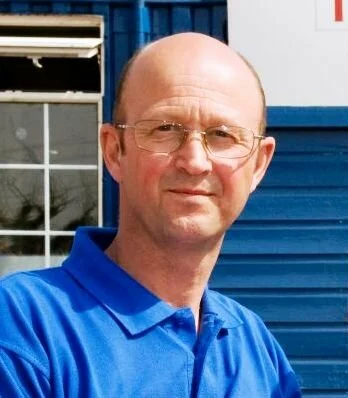 On the track without a doubt the two names that spring to mind easily and that is Tony Stant (pictured left) and Les Fellgett. Both have been here since the club started and have guided all age groups at one time or another. Tony manages our SE one and Two squads along with Sundays senior and womens team and ably stepping in last year to manage the Elite team as well whilst Les has been the current U16s manager for the last two or three years and the U13s before that. On the track without a doubt the two names that spring to mind easily and that is Tony Stant (pictured left) and Les Fellgett. Both have been here since the club started and have guided all age groups at one time or another. Tony manages our SE one and Two squads along with Sundays senior and womens team and ably stepping in last year to manage the Elite team as well whilst Les has been the current U16s manager for the last two or three years and the U13s before that.
That said all our managers have played a part in the clubs success and acknowledgement needs to go to Bryan Harvey U13 team and British champions manager, Phil Clarke U10s, Leon Mower U19 and Combination manager, with Pete Williamson stepping into manage the Elite team this year and Tony Stant again for when Petes been unavailable. Meanwhile our coaches Dave Hill, Mike Chaplin, Bill Brooke as well as those managers above have helped with general training of all ages at one time or another through the season.
Off the track the committee has worked tirelessly to try and improve facilities and conditions for the riders. With the help of riders parents it has been a real team effort.
A special mention must also be said for previous club members and chairmen, Ivan Pike, Dave Hunting and the recently deceased Dave Andrews without whose input 10 years ago the club wouldnt be here today and again whose initial drive and experience has helped mould and shape Ipswich into the club it is today.
Many clubs envy Ipswich's youth development programme. How many under-19s do you have in the club, how do you attract them and keep their interest?
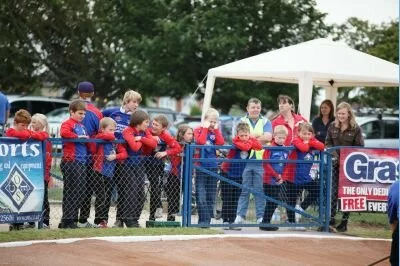
We currently have 40 plus U19 members that regularly compete whether it be locally, regionally or nationally and with at least 12 plus new members joining in the last two or three weeks, since the Ipswich Tour of Britain/Skyride Come & Try session on the British Cycling stand, as well as the regular school Fetes and Come & Try sessions we arrange throughout the year as part of our partnership with Suffolks Childrens University Scheme, we currently have 50 plus junior members on the books.
We try to keep them interested by holding club night training sessions (juniors 6.45 until 8.15 and seniors 8.15 to 9.30) on a Monday and Tuesday throughout the year with our Academy for new members and novices on a Friday (7.00 until 8.15). We are constantly mixing it up so that riders ride above their level in a safe environment to gain valuable experience. Team managers rotate riders to suit opposition where ever possible. For example former British U10 champ Jack Chaplin (11-years-old) has this year made his debut in our Combination team as has Pierce Bacon, whilst Lisa-Maria Brumpton, Pierce and brother Harrison, Jack Chaplin and Ben and Alex Harvey have all stepped up to fill our U16s spots on occasions at South-East Youth Level. Friday night is really about fun with plenty of bike games, relay racing on bike and foot, limbo poles, bike handling skills and the odd proper race thrown in.
In terms of racing we encourage as many members as possible to attend the various individuals both locally and regionally and more experienced/seasoned members regularly help out those riders whose parents work or who dont drive to get them there and back again. It really is a Club for All at Ipswich.
At the other end of the scale, not entering a club in the Veterans Fours could have cost you the title. Do you have any plans to expand that section and perhaps entice some familiar Suffolk names back into the game?
We do and have already put plans in place with two current vets members and a very lively third hopefully going to sign for us for next year. Im looking at building both ends of the spectrums where possible and also really encouraging girls to sign up and race which is easier now that we have the European and British Champ Lauren Jacobs for them to look up to and to help mentor them. Id like to see a club that has depth at all ages and both genders.
Last weekend Ipswich also won Youth League (pictured below) which, like the Club Champs, involves a lot of travelling. How do you manage to fund it?
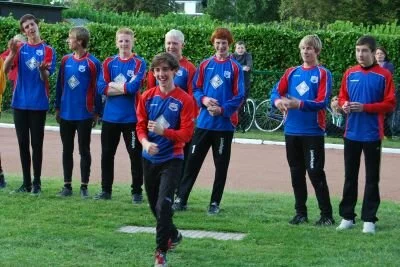
As a club its appreciated that our junior members parents spend a lot of time, money and effort in getting their kids not only to training and local/regional racing but also around the country to ride and help the club in pursuit of success. In terms of travelling nationally, the kids all love meeting up with and speaking and racing against different riders and those riders that they may have met in previous years competitions. However, before my time as Chairman the club believed that the loyalty and commitment shown by our riders does encourage all of its riders to travel and offers a small contribution towards petrol costs when racing as part of a club team outside of the South-East region.
Finally can you hold on to your title on 2013?
Wed like to think so, especially if we can field and enter a Vets team to gain those valuable extra points that wouldnt have made it as close as it was this year. But Ive no doubt that Pete Barnes and Poole will be looking to recapture the trophy and title theyve just lost as well as a host of other teams such as Sheffield, Wednesfield and Horspath who will be looking to put their name on it. Its always going to be a tough year when so many clubs have so many talented riders at different age groups across the country. This year we just did enough in each category to see us over the finishing line first, but heres to 2013 already in the hope we can go back-to-back like Poole.
EXETER TRANSFORMATION - posted 29 June 2012
We recently published a series of pics showing the remarkable transformation that has taken place at Exeter's Wheels Centre track over recent months. Club members rallied together to totally renovate what was, by their own admission, a tired circuit. The transformation has been a herculian effort and the result is, well, simply remarkable.
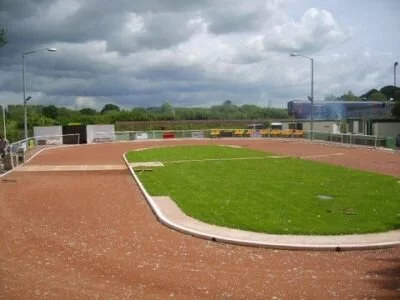
So we asked hard-working club secretary Lynn Parker to take us behind the scenes for an in-depth look at the Exeter project. Here's what Lynn had to say
From November 2011 to date club volunteers have worked every weekend (except at Christmas when families came first) determined to upgrade the track and facilities at the Wheels Centre, Cofton Road, Marsh Barton, Exeter. Limited funds were available but resources in the form of plant machinery, landscaping and labour were given freely and different skills were applied from club members, parents and friends alike.
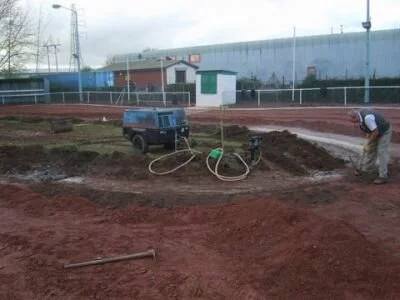
Work began by removing the old worn kerbs, replacing them with new raised kerbs and installing 150 meters of drainage pipes. 40 tonnes of topsoil was donated to raise the level of the centre green to kerb level which prevented ponding. The centre green was then completely re-turfed. New shale was delivered from Scotland and used to refurbish the track. The pit entrance was widened and lighting installed together with home/away numbers, hangers and signage.
New permanent bucket seats and benches were put in place around the track and in the pits together with a new covered seating area and the erection of safety rails at the back of the grandstand. The track perimeter walls were rendered and coloured and all buildings were painted.
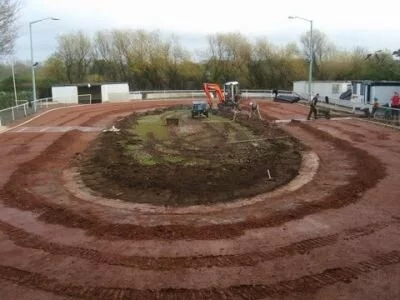
Unsightly willow trees were removed from the bank where there are future plans to provide a new grassed viewing area. The starters hut has recently been demolished and is the process of being replaced with an updated larger version. An additional pit gate will be provided in the next few weeks.
The club is applying for grant funding to obtain a new club hut, changing rooms and toilet. Members have obtained much appreciated funding from selling advertising boards to local traders which are adorning the track.
All this work has been possible due to the tremendous club spirit. From 7 years to 70 years everyone is pulling together in every way they can to improve this much-loved facility for the benefit of all cycle speedway enthusiasts. A big thank you to one and all!
Editor's Note
What a shining example Exeter CSC is to us all. Congratulations to everyone involved in the remarkable transformation.
|