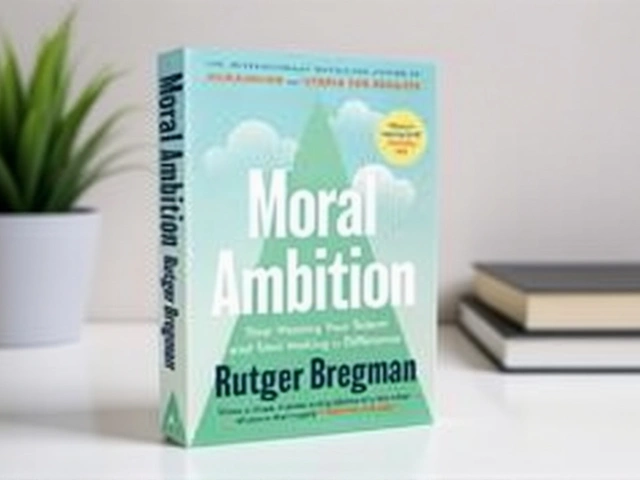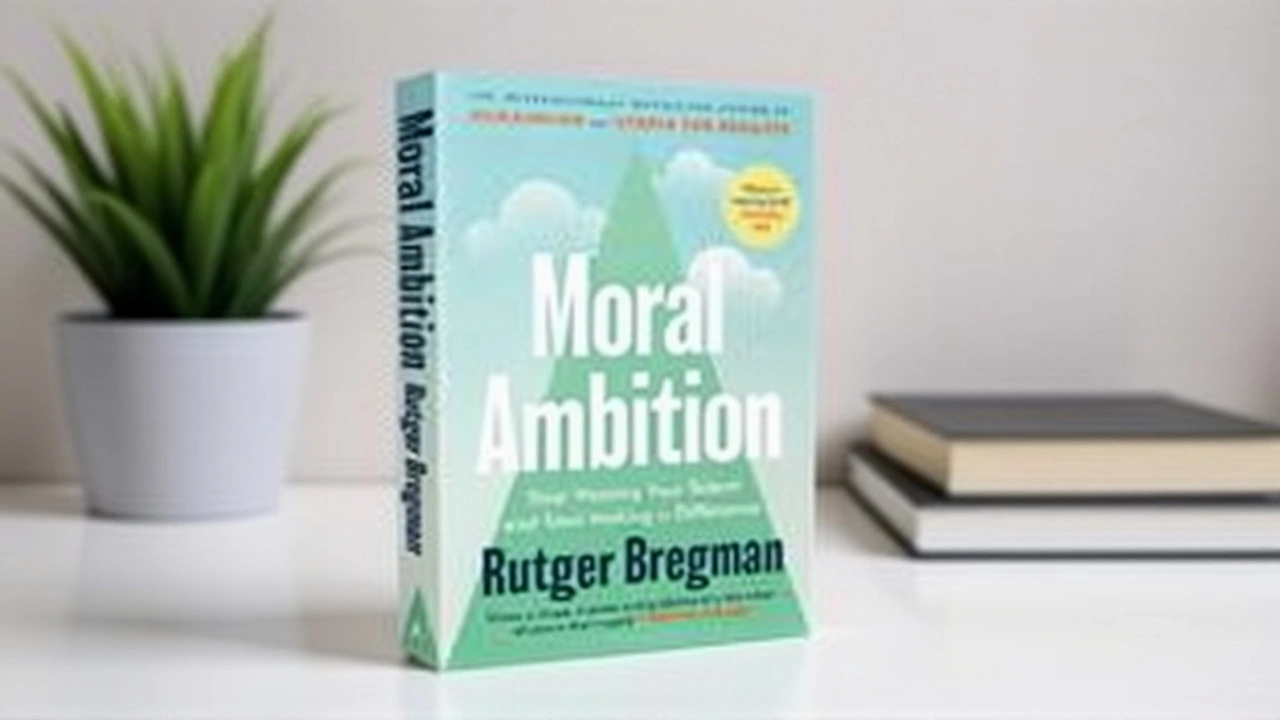
What if the 80,000 hours you’ll spend at work aren’t meant to fill a corner office—but to heal the planet? That’s the question Rutger Bregman, the Dutch historian and moral philosopher, throws at readers in his new book, Moral Ambition: Stop Wasting Your Talent and Start Making a Difference, releasing May 6, 2025, from Little Brown and Company. It’s not another self-help guide about hustle culture. It’s a reckoning. A call to stop trading your life for titles and bonuses, and start building something that outlives you.
The 80,000-Hour Problem
Most people don’t realize they’ll clock roughly 80,000 hours at work over a lifetime. That’s 2,000 weeks. Bregman doesn’t just count them—he questions why so many of those weeks are wasted on jobs that do little more than extract value: data entry for insurance firms, ads for sugary snacks, customer service scripts that make people feel like problems to be solved, not humans to be heard. He calls this the great misalignment—where talent flows toward systems that profit, not ones that heal.
"Still, millions of people are stuck in mind-numbing, pointless, or just plain harmful jobs," he writes. "There’s an antidote to this waste of talent, and it’s called moral ambition."
What Is Moral Ambition?
Forget the old metrics. Moral ambition isn’t about being the CEO. It’s about being the person who designs the clean water filter for rural villages. The engineer who rethinks vaccine delivery in conflict zones. The teacher who stays in underfunded schools because the kids need her. It’s about measuring success by impact, not salary. By contribution, not corner offices.
Bregman doesn’t ask you to quit your job tomorrow. He asks you to ask: Does this matter? If you’re designing apps that track your steps, maybe. If you’re designing apps that make people feel worse about their bodies, maybe not. The line isn’t always clear—but the question is.
The book’s central idea—"the real measure of success lies not in what we accumulate, but in what we contribute"—isn’t new. But Bregman makes it feel urgent. He’s not preaching. He’s pointing. To the nurses who stayed during COVID. To the farmers restoring soil in Kenya. To the coders building open-source tools for climate modeling.
A Movement, Not a Manifesto
What makes Moral Ambition different from other books on purpose is that Bregman doesn’t just talk about change—he shows you who’s already doing it. He profiles The School for Moral Ambition, the organization he co-founded, which trains young professionals to redirect their skills toward systemic problems: climate adaptation, mental health access, public health infrastructure. These aren’t volunteers. They’re lawyers, architects, data scientists—people with elite educations—choosing to work where the need is greatest, not the paycheck.
"They’re the builders, the problem-solvers, the doers who have chosen a path less traveled," reads the promotional copy. And it’s true. You’ve probably met one. Maybe you are one.
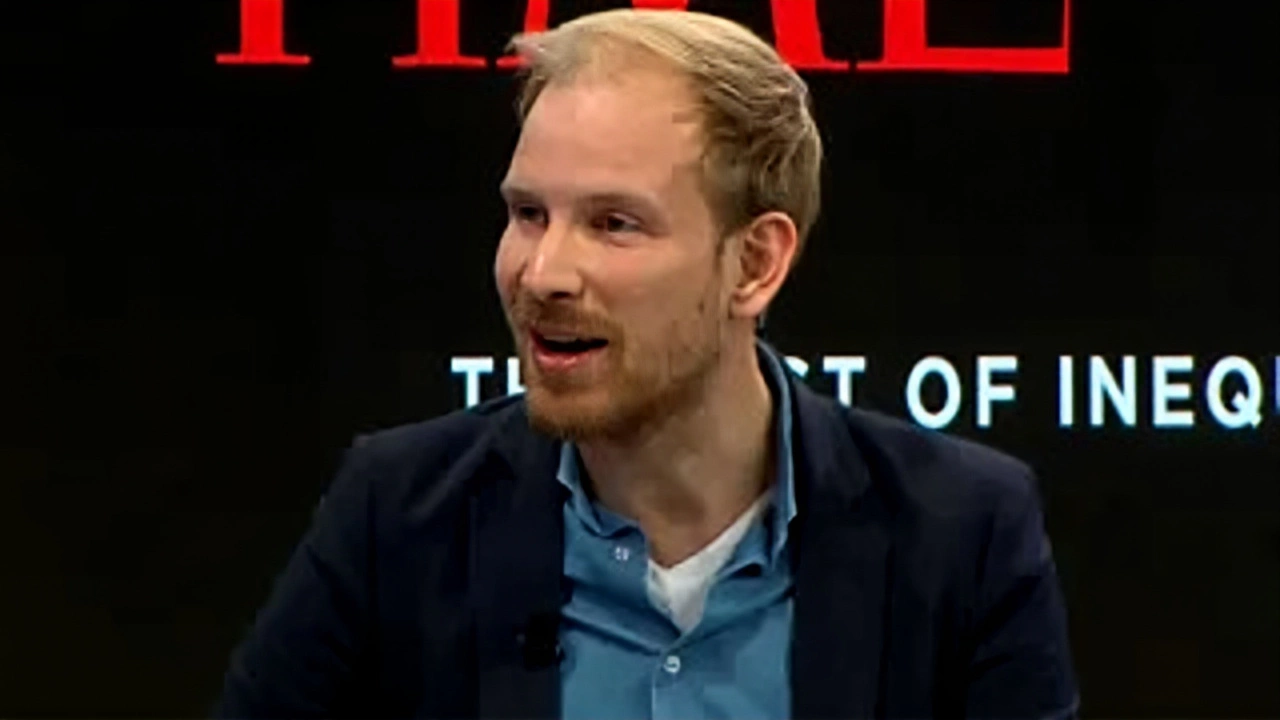
Why This Matters Now
After years of burnout, quiet quitting, and the Great Resignation, people are tired of hollow achievements. The pandemic didn’t just expose health inequities—it exposed the emptiness of many careers. Bregman’s timing is perfect. The book arrives as Gen Z and millennials increasingly reject traditional career ladders. A 2024 LinkedIn survey found that 68% of workers under 35 would take a 20% pay cut for work with clear social impact. Bregman gives them a language for that feeling.
"Moral Ambition gives us hope, humour and guidance at a time when all are in short supply," wrote historian Timothy Snyder. Adam Grant, the Wharton professor and best-selling author, called it "the rare read that might actually help you become a better person."
From Bestseller to Movement
Bregman isn’t new to this. His 2017 book Utopia for Realists, which argued for universal basic income and a 15-hour workweek, became a global phenomenon—translated into 46 languages, selling over two million copies. His 2020 follow-up, Humankind, challenged the idea that humans are inherently selfish, offering evidence that cooperation, not competition, is our default mode. Critics called him idealistic. The public called him inspiring.
This time, the momentum is faster. Despite its May 2025 release, Moral Ambition has already been named a GUARDIAN BOOK OF THE SUMMER 2025 and an INSTANT SUNDAY TIMES BESTSELLER—a rare feat for a book that hasn’t even hit shelves. The Financial Times called it "brisk and persuasive… an optimist’s manifesto." The Guardian noted it "insists on the necessity of doing all you can to allow yourself to be sensitized… to that which eats away at the dignity… of the entire living environment."

What Comes Next?
Bregman’s real innovation isn’t the book—it’s the infrastructure around it. The School for Moral Ambition is already running fellowships in Amsterdam, Berlin, and Cape Town. Their curriculum? How to identify high-impact problems. How to measure progress without traditional KPIs. How to stay resilient when the system pushes back.
There’s no app for moral ambition. No course on LinkedIn Learning. But there’s a growing network of people who’ve decided that legacy isn’t about what’s in your bank account—it’s what you leave behind for the next generation.
"We’re not asking you to be perfect," Bregman writes. "Just present. And purposeful."
Frequently Asked Questions
What exactly is moral ambition, and how is it different from regular ambition?
Moral ambition, as defined by Rutger Bregman, is the drive to excel—not in wealth, status, or power, but in solving the world’s most urgent problems. Unlike traditional ambition, which measures success by personal gain, moral ambition uses impact as its metric: fewer deaths from preventable disease, cleaner air, fairer systems. It’s ambition with a conscience, focused on contribution over accumulation.
Who is Rutger Bregman, and why should I trust his ideas?
Rutger Bregman is a Dutch historian and bestselling author whose books, including Utopia for Realists and Humankind, have sold over two million copies in 46 languages. He’s known for combining rigorous research with accessible storytelling, challenging mainstream assumptions about human nature and economics. His ideas have influenced policymakers in the EU and UN, and he’s been called "a more politically radical Malcolm Gladwell" by the Financial Times.
Can someone with a corporate job still practice moral ambition?
Absolutely. Bregman argues you don’t need to quit your job—you need to reframe it. A corporate lawyer could use their skills to help nonprofits navigate regulations. A marketing executive could shift campaigns away from exploitative messaging. Even in traditional roles, moral ambition means asking: "Who benefits? Who gets harmed? Can I make this better?" Small shifts, multiplied, create systemic change.
How does The School for Moral Ambition help people act on this philosophy?
Co-founded by Bregman, The School for Moral Ambition offers fellowships, workshops, and mentorship to professionals seeking to redirect their careers toward high-impact work. It teaches practical skills like identifying systemic problems, measuring social ROI, and navigating institutional resistance. Graduates have gone on to lead climate tech startups, public health initiatives, and ethical AI projects—proving moral ambition isn’t theoretical.
Is this just another feel-good book, or does it offer real tools for change?
It’s neither. Bregman avoids vague inspiration. He names real people—engineers in Bangladesh, nurses in Detroit, data analysts in Nairobi—who’ve redirected their careers. He includes case studies, frameworks for evaluating job impact, and even a "moral ambition audit" readers can use to assess their own work. It’s a guidebook for action, not just reflection.
Why is this book getting so much attention before its release?
Because it speaks to a cultural turning point. After years of burnout, disillusionment with corporate culture, and climate anxiety, millions are searching for meaning. Moral Ambition doesn’t just validate that feeling—it gives it direction. Early endorsements from Adam Grant and Timothy Snyder, plus pre-release bestseller status from the Sunday Times, signal it’s tapping into a deep, widespread hunger for purpose-driven work.